Double Decker Press publishes books with photos of volcanoes and focused road guides to volcanic national parks. This resource covers volcano photography, essential reading for national park visitors, trip-planning advice for America's volcanic landscapes, and the surprising cultural reach of volcanic imagery — from protected wilderness to casino design floors.
Looking at Volcanoes: Photography, Light, and the World Beneath Our Feet
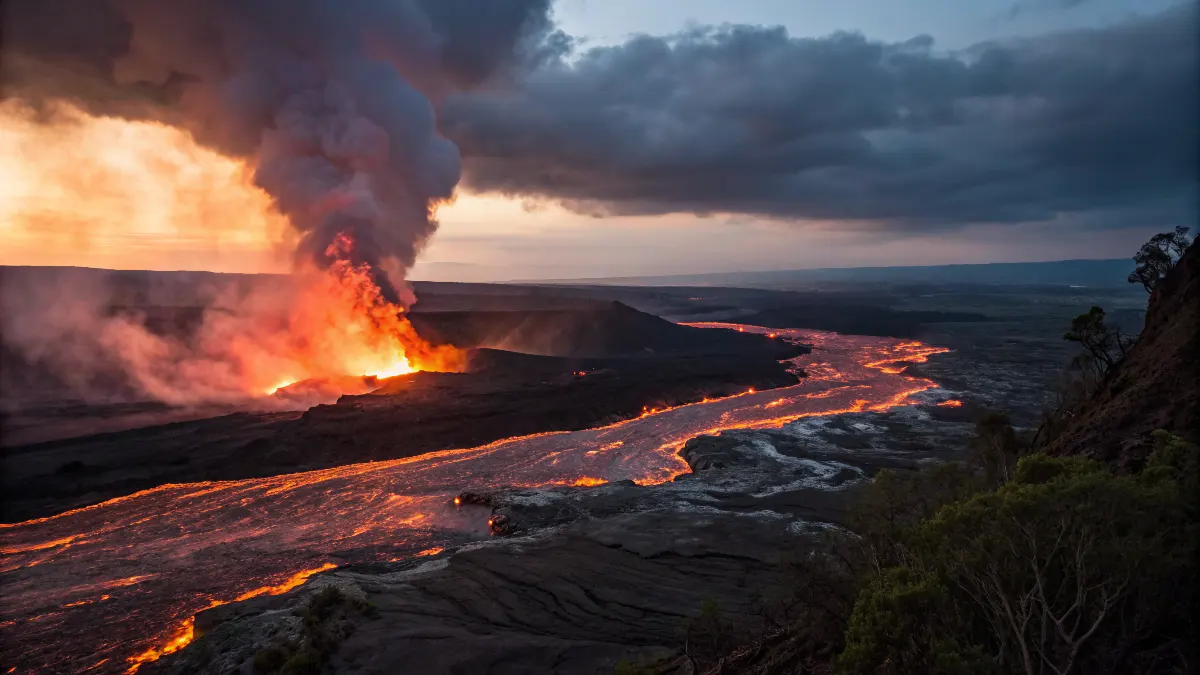
A live volcano is one of the most compelling subjects in nature photography. Volcano pictures endure because they hold tension between beauty and danger in a single frame — the same lava field reads entirely differently at dawn than at midnight, and the most lasting images are usually quieter than you'd expect. Drama is rarely what makes a volcanic photograph work. Light, timing, and proximity to active features matter far more.
The eruption itself is almost never the true subject of a captivating volcanic scene. The horizontal blast photographs from the 1980 eruption of Mount St. Helens are a good example of how images can do what instruments cannot: those pictures let scientists reconstruct the sequence of events with a precision that no sensor reading could match alone. In ways that written description cannot accomplish, volcano photographs make the abstract tangible.
Where to Find Volcano Photos Online and in Print
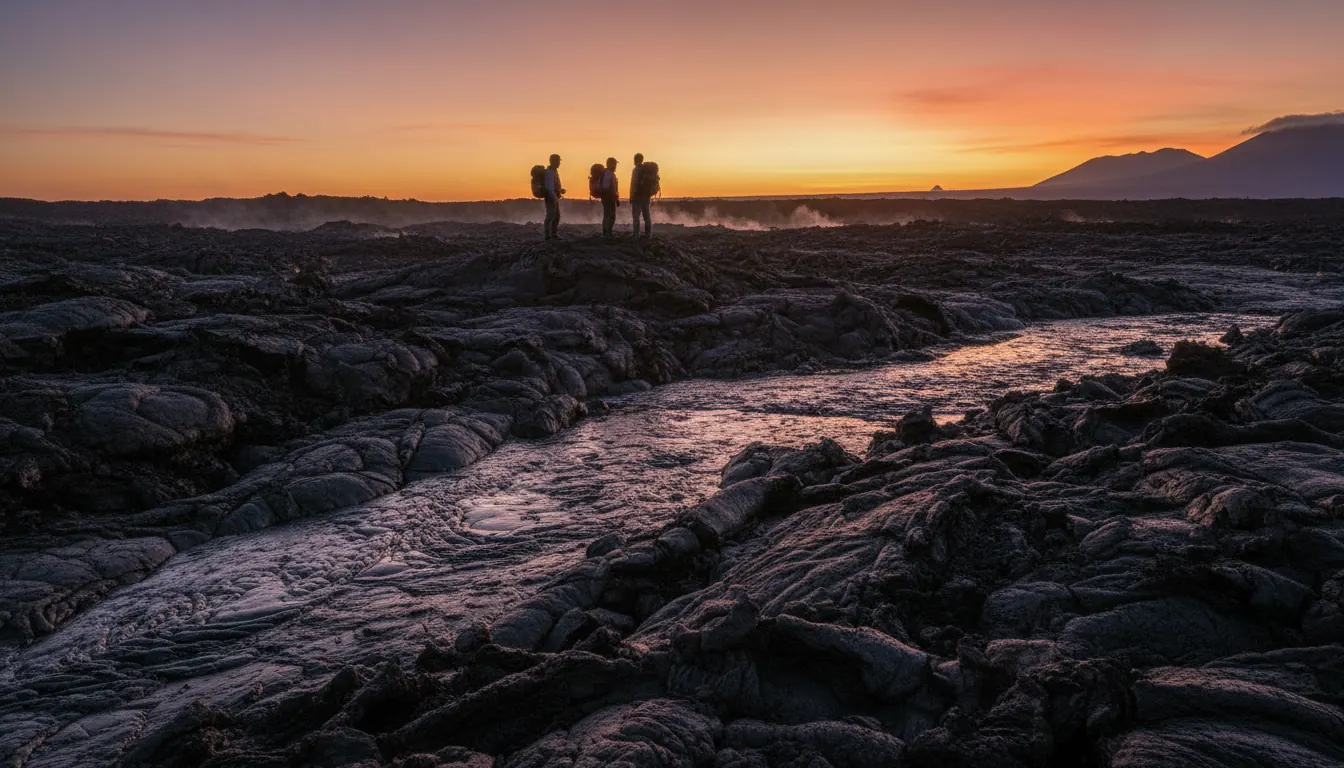
If you need a specific image of volcanic behavior — a shield vent, a stratovolcano in eruption, or a lava tube interior — the USGS Volcano Hazards Program maintains the most authoritative free collection of volcanic imagery online, updated continuously as monitoring teams record new activity. For editorially curated collections built around national parks, Double Decker Press uses volcano photos as trip companions, selecting images that show visitors what they will actually encounter on the ground rather than presenting only extreme or spectacular moments.
Books About Volcanoes and National Park Road Guides
Volcano literature divides naturally into two types: science-popular crossover books that explain geology to general readers, and travel-oriented road guides meant to be used on the ground during a visit. The Double Decker Press catalog addresses both needs, and the Decker reference books — by Robert and Barbara Decker — remain the most widely used introduction to volcano science for non-specialists.
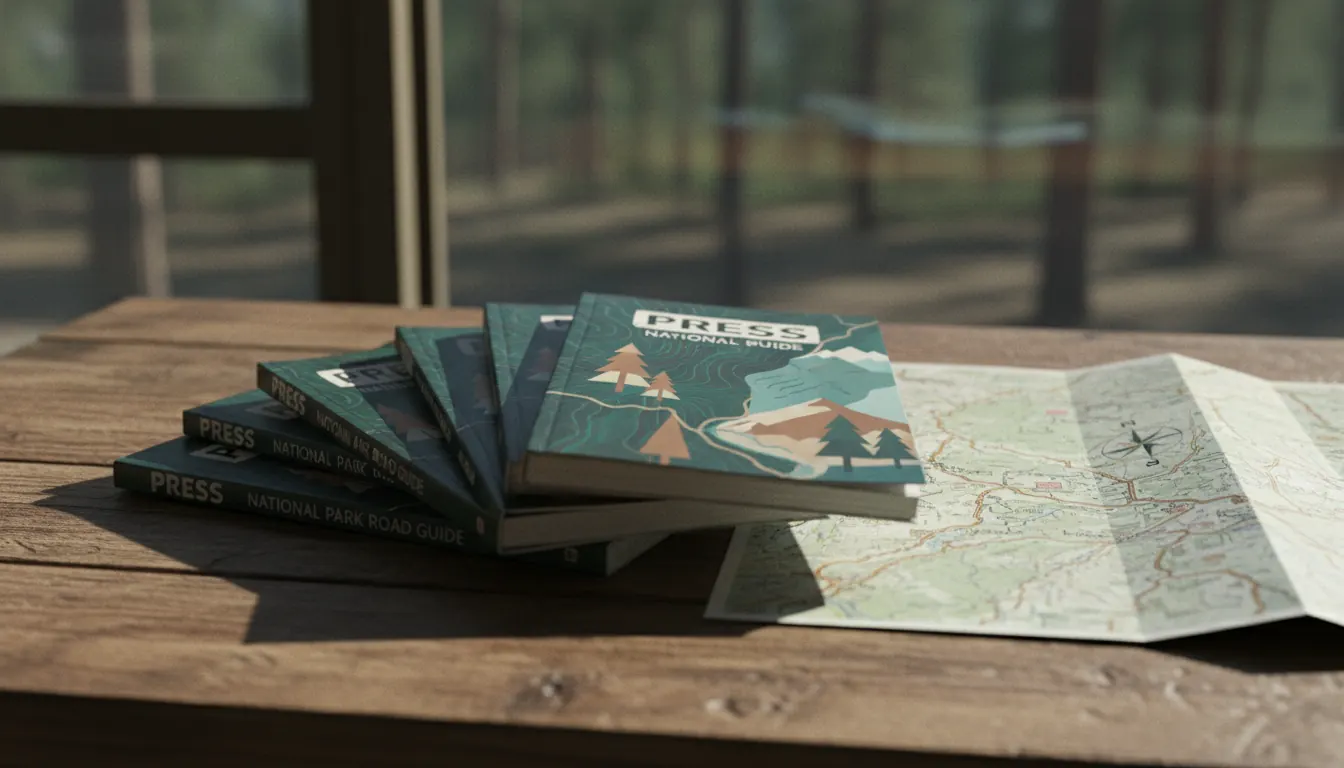
Most national park guidebooks are written by generalists covering dozens of parks in sequence. Double Decker Press road guides take a different approach: one park per book, all research conducted on-site, with drive directions and annotated notes on the best viewpoints along each road. The Hawaii Volcanoes guide, for instance, proceeds pull-off by pull-off along the Chain of Craters Road — a level of on-the-ground detail that general travel guides do not attempt.
| Title | Author / Publisher | Park / Scope | Best For |
|---|---|---|---|
| Road Guide to Hawaii Volcanoes National Park | Double Decker Press | Hawaii Volcanoes NP | First-timers and photographers |
| Road Guide to Mount Rainier NP | Double Decker Press | Mount Rainier NP | Hikers and geology enthusiasts |
| Road Guide to Mount St. Helens | Double Decker Press | Mount St. Helens NVM | History buffs and scientists |
| Road Guide to Crater Lake NP | Double Decker Press | Crater Lake NP | Road trip travelers |
| Road Guide to Lassen Volcanic NP | Double Decker Press | Lassen Volcanic NP | Backpackers |
| Volcanoes | Robert and Barbara Decker | General | General readers |
| Volcano Watching | Robert and Barbara Decker | General / Field | Field enthusiasts |
From Hawaii's Big Island to the slopes of the Sierra Nevada, America's volcanic national parks tell a continuous story of the Earth's history. A focused guide — one that treats each setting as its own story rather than a line item in a regional survey — makes a park visit substantially more meaningful.
Planning Your Trip to America's Volcanic National Parks
Visiting a volcanic park requires more preparation than a standard nature hike. Conditions change quickly, and at higher elevations, seasonal access is sharply limited. Knowing which features to prioritize on which days can be the difference between a memorable visit and a frustrating one.
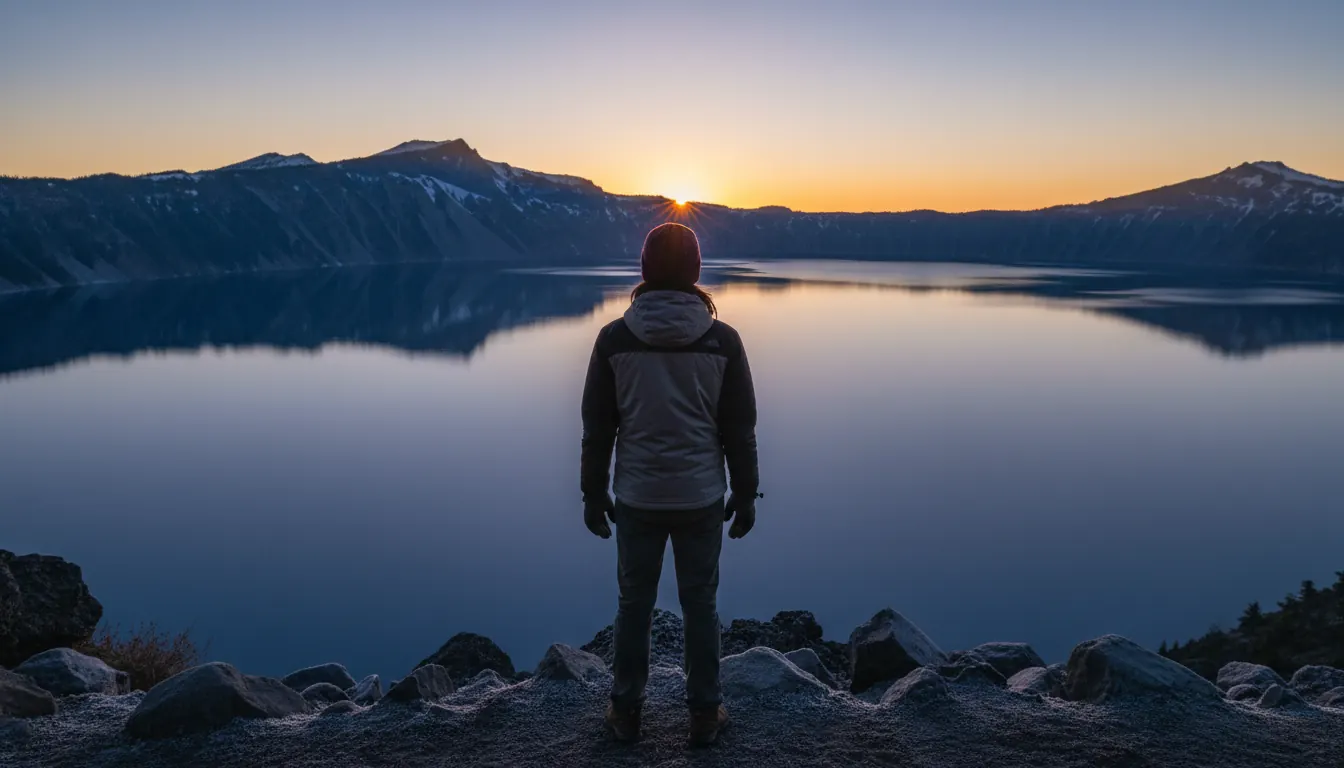
Hawaii Volcanoes National Park is open year-round, but access to active lava flows depends entirely on current volcanic activity. The USGS monitoring pages are essential reading before any trip. The Cascade parks — Rainier, St. Helens, Crater Lake, Lassen — are generally accessible only from July through September due to snow. For photographers, plan around crater-rim golden-light windows: the rim of Crater Lake at sunrise cannot be recreated in post-processing, and the steam contrast at Lassen's geothermal features is most dramatic in cool morning air.
- Hawaii Volcanoes National Park, Hawaii — Home to Kīlauea, one of the world's most continuously active volcanoes. Visitors can walk through lava tubes, look over active craters, and witness glowing lava displays during busy flow periods.
- Crater Lake National Park, Oregon — Formed when Mount Mazama collapsed roughly 7,700 years ago, creating the deepest lake in the United States inside a caldera. The vivid blue water and surrounding cliffs make it one of the most photographed volcanic scenes in North America.
- Lassen Volcanic National Park, California — Hosts all four volcanic types and a concentration of hot mud pots, fumaroles, and geothermal fields rarely found together in a single accessible location.
- Mount Rainier National Park, Washington — A glacier-capped 14,411-foot stratovolcano considered one of the most dangerous in the world due to its proximity to major population centers, surrounded by wildflower meadows at lower elevations.
- Mount St. Helens National Volcanic Monument, Washington — Site of the 1980 eruption that transformed the study of volcanoes. The recovering blast zone remains one of the most scientifically important landscapes in the American West.
- Sunset Crater Volcano National Monument, Arizona — A cinder cone formed around 1085 CE, with painted desert colors, unusual black lava fields, and far fewer crowds than the major parks.
Field Photography Tips for Volcanic Landscapes
Shoot in RAW format and bracket exposures. Lava fields produce contrast ratios that a single exposure cannot handle reliably. Use a filter holder to protect your lens glass — volcanic fumes near active vents degrade lens coatings over time. Bring at least twice the batteries you think you'll need: cold nights at altitude and extended outdoor sessions drain batteries far faster than any manufacturer's estimate.
Wind direction matters more than distance when working near active vents. Always check USGS and National Park Service advisories the morning of your shoot — conditions at volcanic sites can shift within hours.
Where Fire and Fortune Meet: Volcanic Imagery in Casino Design
There is a deliberate connection between volcanic imagery and casino culture. Both settings deal in danger, sudden change, and suspended expectation. When the entertainment industry needed a visual language powerful enough to hold attention on a gaming floor, volcanoes kept surfacing as the answer.
The use of volcanoes as a design element traces back to the Las Vegas Strip in the late 1980s, when properties needed street-level spectacle to compete for foot traffic. When the outdoor eruption show at The Mirage opened in 1989 — modeled on footage from Hawaii Volcanoes National Park — it set a standard that has since been replicated at casino resorts worldwide. A volcano activates primal associations: heat, energy, unpredictability. That emotional range maps directly onto what a casino floor is engineered to produce.
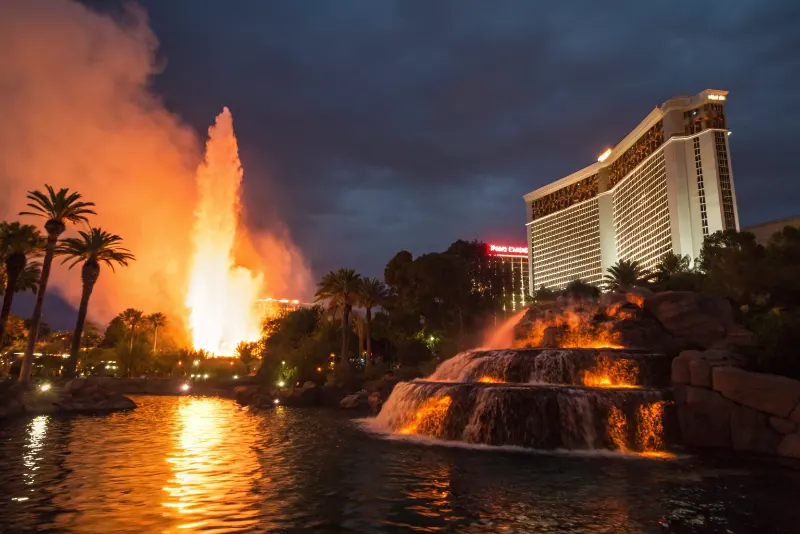
The volcanic aesthetic scales well: a smaller property can use lava-rock textures and amber lighting to create warmth and drama, while a large resort can build a full erupting structure. Unlike ocean or mountain theming, it requires no geographic specificity, and the visual language of fire and stone has lost none of its impact since The Mirage demonstrated how effectively it translates into a live entertainment context.
- The Mirage, Las Vegas, Nevada — The world's most recognized casino volcano. The outdoor eruption has run nightly since 1989, originally designed around footage from Hawaii Volcanoes National Park.
- Atlantis Paradise Island, Nassau, Bahamas — The Dig, a tunnel structure built around the main casino floor, uses volcanic-rock waterfalls as its central design motif.
- Hard Rock Hotel, Punta Cana, Dominican Republic — Volcanic rock formations and waterfalls integrated throughout the pool area and gaming grounds.
- Mandalay Bay, Las Vegas, Nevada — Lava rocks and a volcanic sand beach form the tropical landscape adjoining one of the Strip's largest casino floors.
- Casino de Punta Arenas, Chile — Markets its proximity to the Patagonian volcanic belt as a core part of its identity.
- Hotel Casino Termas de Chillán, Chile — Built on the slopes of Chillán volcano, combining a full casino with geothermal hot springs fed directly by volcanic activity below.
Volcanic Regions of the World and Their Cultural Footprint
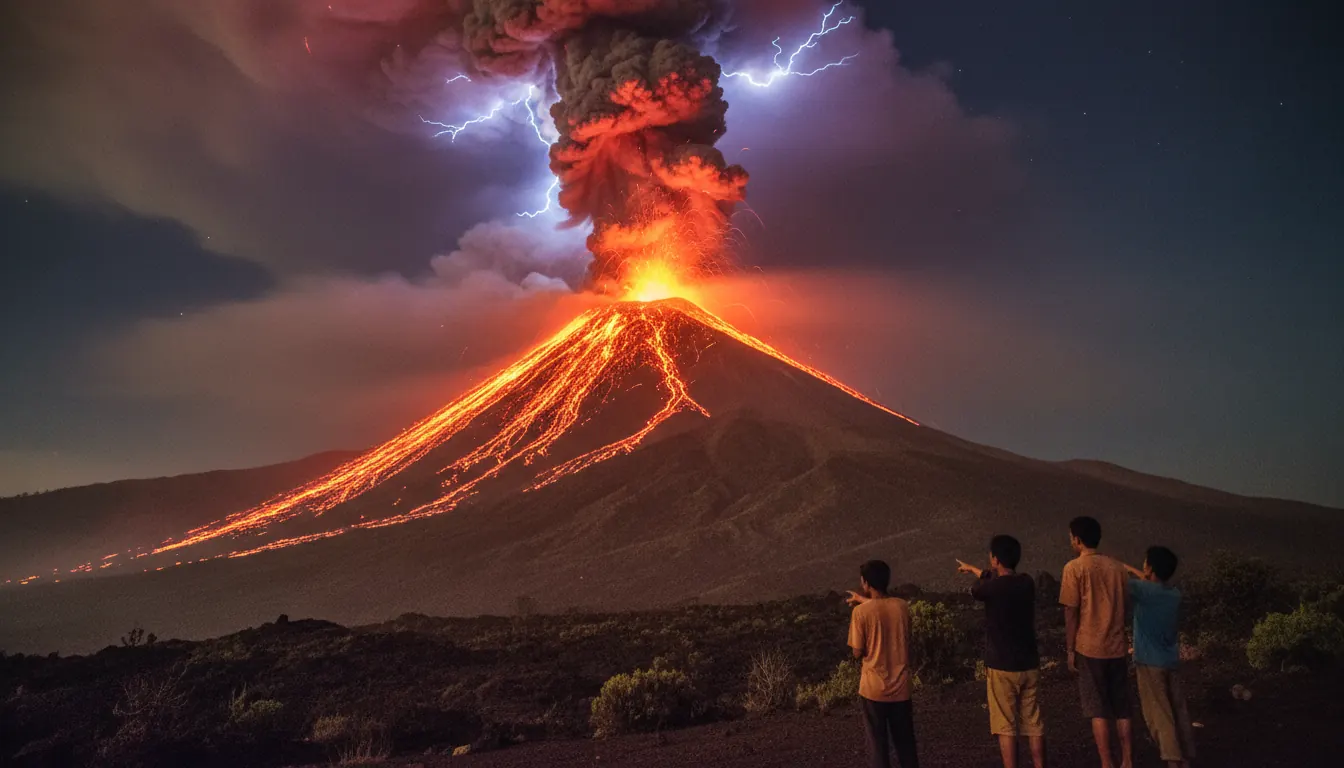
Volcanic activity precisely follows the edges of tectonic plates — the Pacific Ring of Fire, the Mid-Atlantic Ridge, the East African Rift. Understanding that geography changes how a park visit feels: instead of seeing an unusual rock formation, you see a working piece of a planetary system that has operated for billions of years.
| Region | Country | Notable Volcano | Activity Status | Nearby Protected Site |
|---|---|---|---|---|
| Pacific Northwest | USA | Mount St. Helens | Active (last eruption 2008) | Mount St. Helens NVM |
| Cascades | USA | Mount Rainier | Potentially active | Mount Rainier National Park |
| Hawaiian Hotspot | USA | Kīlauea | Continuously erupting | Hawaii Volcanoes National Park |
| Ring of Fire | Indonesia | Merapi | Highly active | Merapi Volcano National Park |
| Mid-Atlantic Ridge | Iceland | Hekla | Active | South Iceland Highland Reserve |
| East African Rift | DR Congo | Nyiragongo | Active | Virunga National Park |
| Mediterranean Arc | Italy | Etna | Continuously active | Etna Regional Park |
Communities that live alongside active volcanoes develop relationships with the earth's activity that reshape identity, art, and commerce. In Iceland, volcanic vocabulary is woven into everyday language. In Hawaii, Kīlauea is the home of Pele, and that cultural geography shapes how Hawaii Volcanoes National Park presents its landscape to visitors — an influence visible even in the Double Decker Press road guide to the park. Sicily's food, architecture, and character have been formed over thousands of years by Etna's regular eruptions and the fertile soils they produce. The pattern repeats in every volcanic society on Earth.
Frequently Asked Questions
- Which casino has a famous outdoor volcano show?
- The Mirage on the Las Vegas Strip has run the most famous casino volcano show since 1989, making it the most recognized example of volcanic theming in the entertainment industry. Atlantis Paradise Island in the Bahamas and resort casinos in Chile also feature significant volcanic design elements.
- Where can I find the best volcano photo galleries online?
- The USGS Volcano Hazards Program maintains the most comprehensive and up-to-date free collection, updated continuously as monitoring teams document new activity. For editorially curated national park photography, Double Decker Press offers a trip-companion perspective focused on what visitors actually see on the ground.
- Which books about volcanoes are best for first-time readers?
- Volcanoes by Robert and Barbara Decker has served as the standard introduction for decades. Volcano Watching, a companion field guide by the same authors, is more narrowly focused on observing volcanic activity in person. The Double Decker Press road guide series introduces each park without assuming geological background, providing enough scientific context to genuinely inform a visit.
- Which US national parks are dedicated to volcanic landscapes?
- The primary volcanic parks are Hawaii Volcanoes, Crater Lake, Lassen Volcanic, Mount Rainier, and Mount St. Helens National Volcanic Monument. Additional volcanic monuments include Sunset Crater in Arizona, Craters of the Moon in Idaho, and Newberry Crater in Oregon.
- How do I take safe photographs near an active volcano?
- Research the specific hazards of the site before arriving. Near active lava, laze — the acidic steam produced when lava meets ocean water — is a primary danger, and wind direction matters more than raw distance from the flow. Always check USGS and National Park Service advisories on the day of your visit, as conditions at volcanic sites can change within hours.