Active Volcano Photography Guide to Capturing Dramatic Volcanic Photos
Standing at the edge of an active crater is not a comfortable place to make photographs. The heat, the gas, the unpredictability — none of it makes the work easy. But that's exactly why the images that come out of these situations look the way they do. Volcanic photography has expanded as a genre, and the visual language it produces travels far. Designers, publishers, and digital entertainment brands like Thor Fortune casino have used volcanic imagery because it communicates something hard to fake. That quality keeps drawing photographers back to some of the world's most demanding locations.
Why volcanoes attract photographers and how the genre has evolved
The genre isn't new — but what people expect from it has changed. Getting to an active site used to be genuinely difficult. Now, with better access, cheaper travel, and the reach of social media, far more photographers make it to the field. That's raised the bar considerably.
Audiences have seen a lot of this work at this point. Technically clean shots of lava or rising ash columns no longer hold attention on their own. What stands out tends to involve stronger composition, unusual timing, or conditions that most photographers wouldn't attempt. A single well-placed frame — taken at the right moment, in difficult conditions — does more than a hundred competent ones.
"Volcano photography is one of the few genres where your survival instincts and your artistic instincts have to operate at the same time."
The photographers who do this work seriously treat it more like fieldwork than a photo trip. They study the site before they arrive, understand the patterns of activity, and often spend multiple days waiting for conditions to align.
Equipment and preparation for shooting active volcanic landscapes
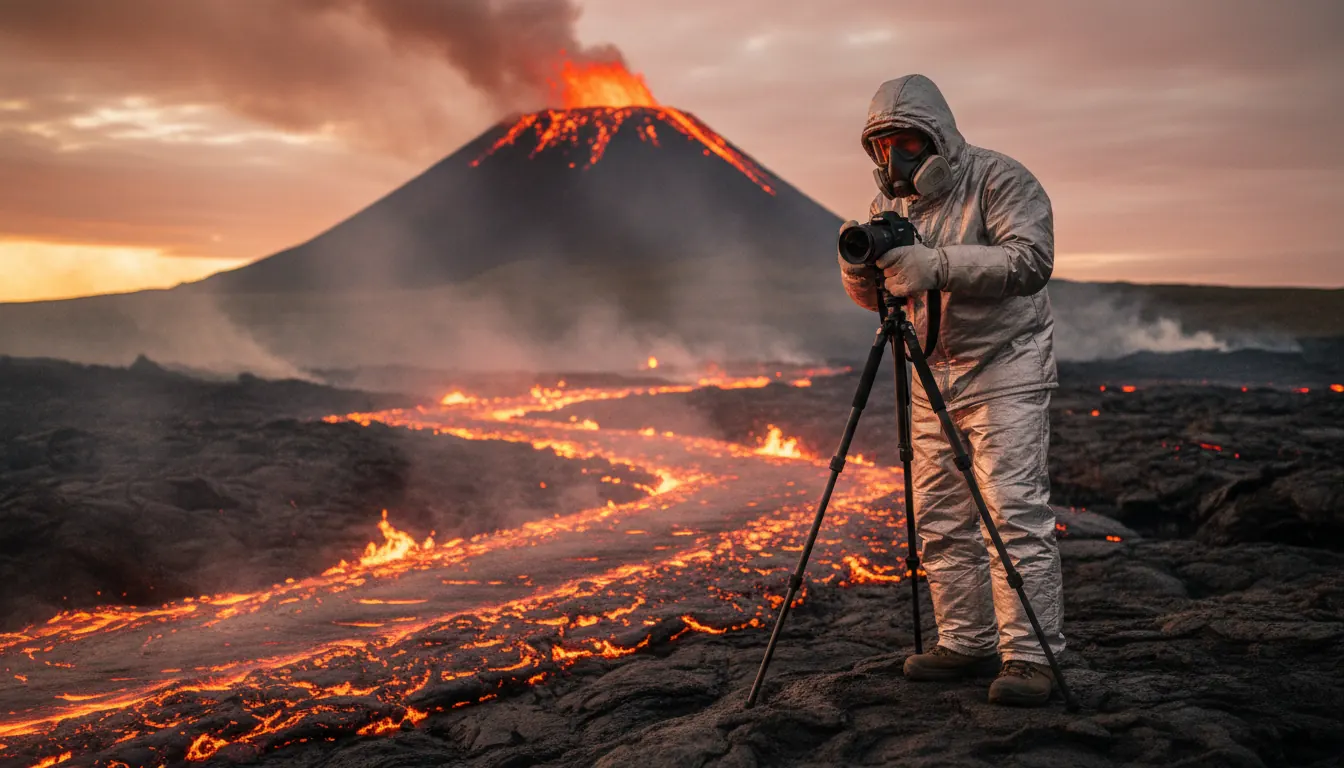
Preparation matters more than equipment here. A well-packed bag won't help if you haven't checked current activity levels, arranged a knowledgeable guide, or identified an evacuation route. That said, the right gear does shape what's possible in the field.
| Equipment | Purpose | Notes |
|---|---|---|
| Telephoto lens (200–600mm) | Shooting from a safe distance | Keeps you back from active zones |
| Wide-angle lens (16–35mm) | Environmental context and scale | Works well for crater rim compositions |
| Sturdy tripod with ball head | Night and long-exposure shots | Essential for lava flow work |
| Protective filter set | Lens protection from ash | UV and CPL filters |
| P100 respirator mask | Personal safety | Rated for volcanic gases, not just dust |
Before heading to any active site, work through this list:
- Check volcanic alert levels through local geological services
- Register with park management before entering restricted zones
- Carry eye protection — fine ash causes serious irritation at altitude
- Know the evacuation route before you raise the camera
- Shoot with a guide familiar with the site's specific patterns
- Store gear in sealed bags between shots to limit ash exposure
Reading the eruption: how experienced photographers time their shots
Timing is where volcano photography separates from landscape work. A mountain stays where it is. A volcano doesn't.
Experienced photographers spend the first hours at a site watching rather than shooting. They track the rhythm of activity, identify where the strongest material comes from, and figure out which angles hold before committing to an exposure. That discipline pays off when conditions peak.
A few things worth watching when you're waiting for the right moment:
- Low rumbling often precedes larger bursts — learn the sound
- Wind direction tells you where not to stand, not just where smoke goes
- Most active sites have rhythm within a session — observe it first
- Golden hour changes everything; the same eruption looks different at dusk
- Cloud cover and sky tone shift the mood of the frame entirely
"Most photographers waste their best light waiting for something bigger. The shot that works is usually the one already in front of them."
Iconic volcano photo locations and what makes them work visually
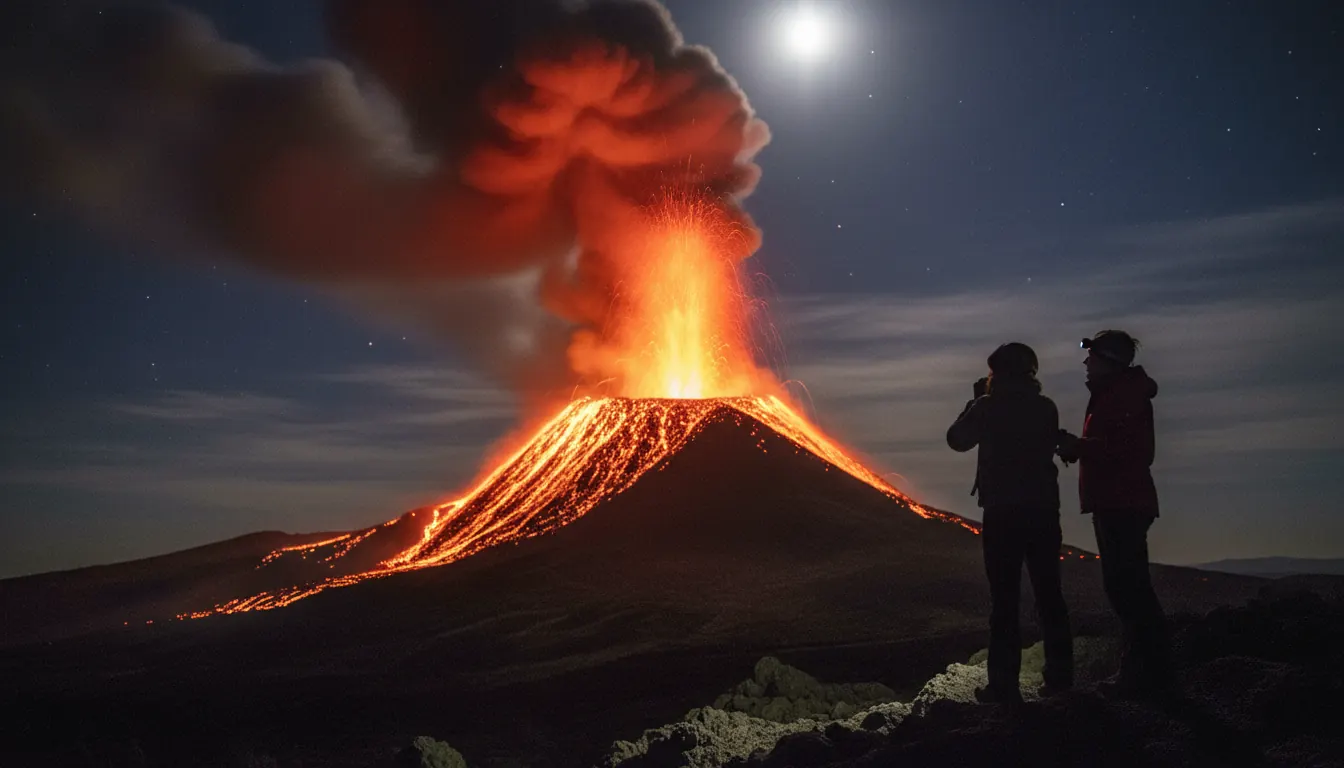
Different sites produce different kinds of images. Choosing the right location for what you actually want to shoot matters more than just going where activity is highest.
| Location | Country | Best For | Practical Season |
|---|---|---|---|
| Kilauea / Big Island | USA (Hawaii) | Lava flows, night glow | Year-round |
| Stromboli | Italy | Timed night eruption sequences | Spring and autumn |
| Mount Bromo | Indonesia | Sunrise rim shots against smoky sky | April – October |
| Eyjafjallajökull area | Iceland | Ice and fire landscape contrasts | May – August |
| Acatenango | Guatemala | Views of neighboring Fuego erupting | November – March |
Stromboli erupts roughly every twenty minutes. That regularity makes it unusually forgiving for timed shots — you don't have to wait long, and you can plan your exposure sequence in advance. Kilauea offers sustained activity over extended periods, which suits photographers who want time to explore angles without pressure. Bromo is more controlled, with strong natural framing at sunrise and consistent foreground interest.
Iceland pairs volcanic terrain with glacial light and flat northern skies — a visual combination that works particularly well for wide shots. Each location has its own character, and that character shapes what's possible.
From field to frame: how dramatic natural imagery finds its way into design and digital culture
Volcanic images move beyond photography portfolios quickly. Editorial, advertising, book covers, platform design — the imagery ends up in a wide range of places, and it tends to work in all of them.
Publishers use strong volcano photography as anchor imagery because it establishes a sense of place without explanation. One well-chosen crater shot on a cover does something that several paragraphs of description cannot.
The shift into digital design has been just as significant. The visual qualities of volcanic landscapes — extreme contrast, intense light, a sense of scale — appear in game interfaces, entertainment branding, and event design. It's imagery that reads as powerful regardless of context, which is part of why it keeps getting used.
For photographers, that broader demand is worth understanding. It affects what kind of images hold commercial value, which locations attract attention, and how a portfolio built on this work gets received outside the photography world.
Active volcano photography rewards patience above almost everything else. The conditions are difficult, the timing is unpredictable, and the equipment takes a beating. What comes out of serious fieldwork in these environments carries a weight that's hard to replicate from safer ground — and that's precisely why it keeps finding an audience.