Volcano Photo Collections From National Parks
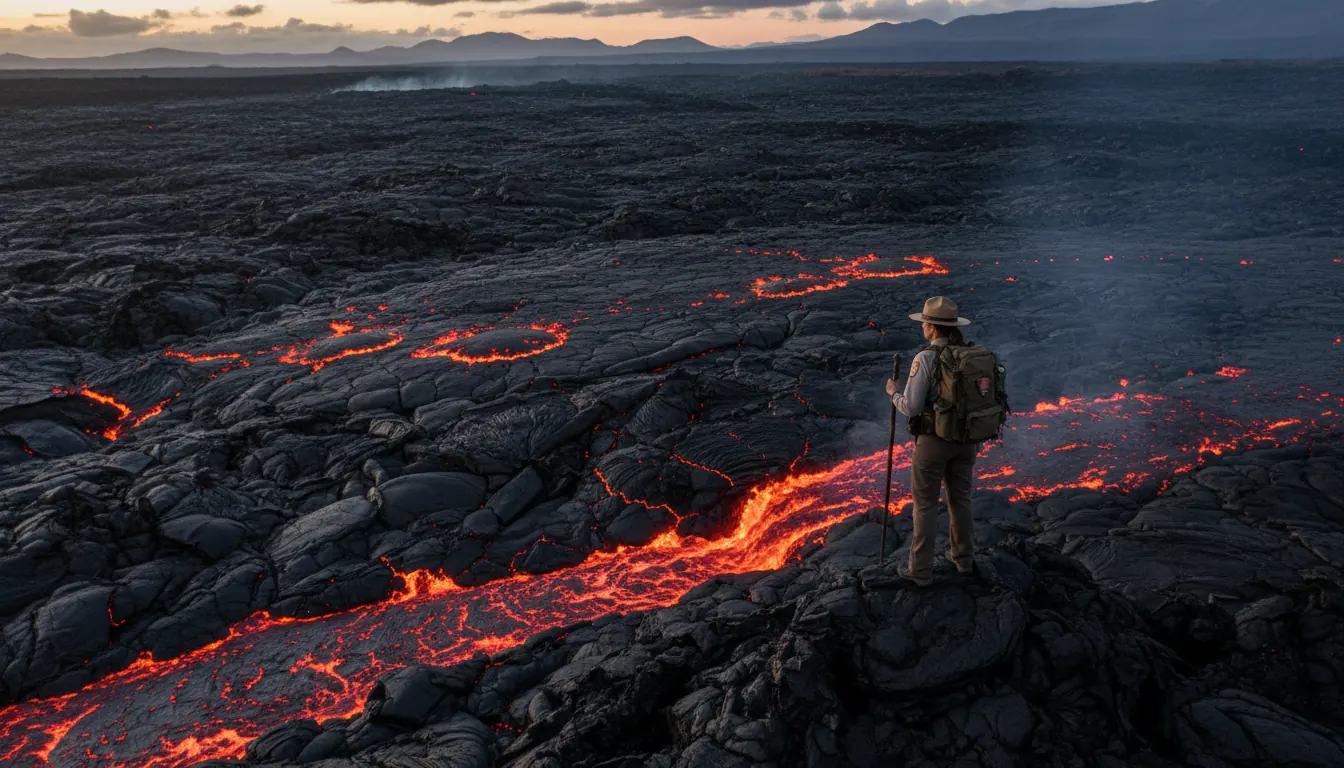
The United States national park system protects the most photographically diverse collection of volcanic landscapes on Earth — from the continuously active lava fields of Hawaii to the ancient caldera of Crater Lake and the regenerating blast zone of Mount St. Helens. Curated volcano photo collections built from these parks offer something commercial stock libraries rarely provide: images tied to specific, named, accessible places that visitors can actually reach.
What Makes a Strong Volcanic Park Photo Collection
A useful volcano photo collection is organised by geological feature type, not just by park name. Researchers, educators, designers, and travellers searching for specific imagery — a shield volcano vent, a lava tube entrance, a hydrothermal pool — need collections that allow feature-level navigation rather than park-level browsing.
- Active lava flow documentation requires series coverage showing progression over time, not single frames.
- Caldera and crater rim photography should include multiple lighting conditions, particularly dawn and dusk.
- Hydrothermal feature collections benefit from both wide environmental shots and tight detail frames showing mineral colour and texture.
- Lava field aerial photography provides geological context that ground-level images cannot supply.
- Historical comparison photography — the same location across decades — is among the most valuable and underrepresented category in most collections.
Key Parks and Their Photographic Strengths
Each volcanic national park offers a different primary photographic subject. The table below outlines what each park does better than any other in the national park system.
| National Park | Primary Photo Subject | Best Season |
|---|---|---|
| Hawaii Volcanoes NP | Active lava flows, lava ocean entries | Year-round |
| Crater Lake NP | Caldera water reflections, rim drama | July – September |
| Lassen Volcanic NP | Hydrothermal features, fumaroles | June – October |
| Mount St. Helens NVM | Blast zone regeneration, crater views | May – October |
"The difference between a volcano photo archive and a volcano photo collection is curation — someone has to have made decisions about what matters and why."
Building and Using Volcanic Park Photo Resources
For photographers building collections from scratch, the single most important discipline is documentation: every image should carry accurate GPS coordinates, eruption or activity status at the time of capture, and the specific geological feature photographed. These metadata fields are what allow a collection to be searched and licensed effectively. For researchers and designers accessing existing collections, the USGS Volcano Hazards Program archive and the National Park Service image library remain the most reliable free starting points before turning to specialist publishers.